


BATCH TESTED SUPPLEMENTS
How to Verify Supplement Batch Numbers Before You Buy
Last Updated: November 24, 2026
Quick Summary
Verifying supplement batch numbers means matching the lot code printed on your bottle to that exact lot's test records, then confirming the report is real and current. The batch number is your starting point, not your proof, because a code only matters if you can trace it to a lab report for your specific lot.
- Find the lot code near the expiration date on the bottom or side label and write it down exactly.
- Search the brand's official quality page, not a reseller page, and match both product name and lot code.
- A batch number alone does not prove independent testing or that results are public.
- NSF and USP lists confirm certification marks but do not verify your individual batch.
- If no lot-specific COA can be produced, treat the product as unverified and do not use it.
Can you trace your supplement to a lab report?Shop supplements from brands that back their labels, with tools and guides to check every batch.
Verify Your Next Batch
Table of Contents
- How do you verify supplement batch numbers?
- Run a supplement batch number lookup the right way
- What batch tested supplements actually prove
- How to check supplement authenticity beyond the label
- Reading the NSF and USP Verified supplements list
- Evaluate a certificate of analysis like a pro
- When a batch lookup fails or the details don't match
- Build your supplement verification checklist today
- Frequently Asked Questions
How do you verify supplement batch numbers?
Verifying supplement batch numbers means matching the lot code printed on your bottle to that exact lot's test records, then confirming the record is real and current. At Tiger Fitness, we tell every customer the same thing: the batch number is your starting point, not your proof. A code on a label only matters if you can trace it to a lab report.
Here's the hard truth most brands hope you skip. A batch number alone does not show that a supplement was independently tested or that results are public. The FDA's small entity compliance guide covers batch recordkeeping, not a universal public lookup system. So you have to do the work yourself.
Below, we'll show you exactly how to run a supplement batch number lookup, read a certificate of analysis, and spot the fakes. The 5 checks we cover catch the problems most buyers miss.
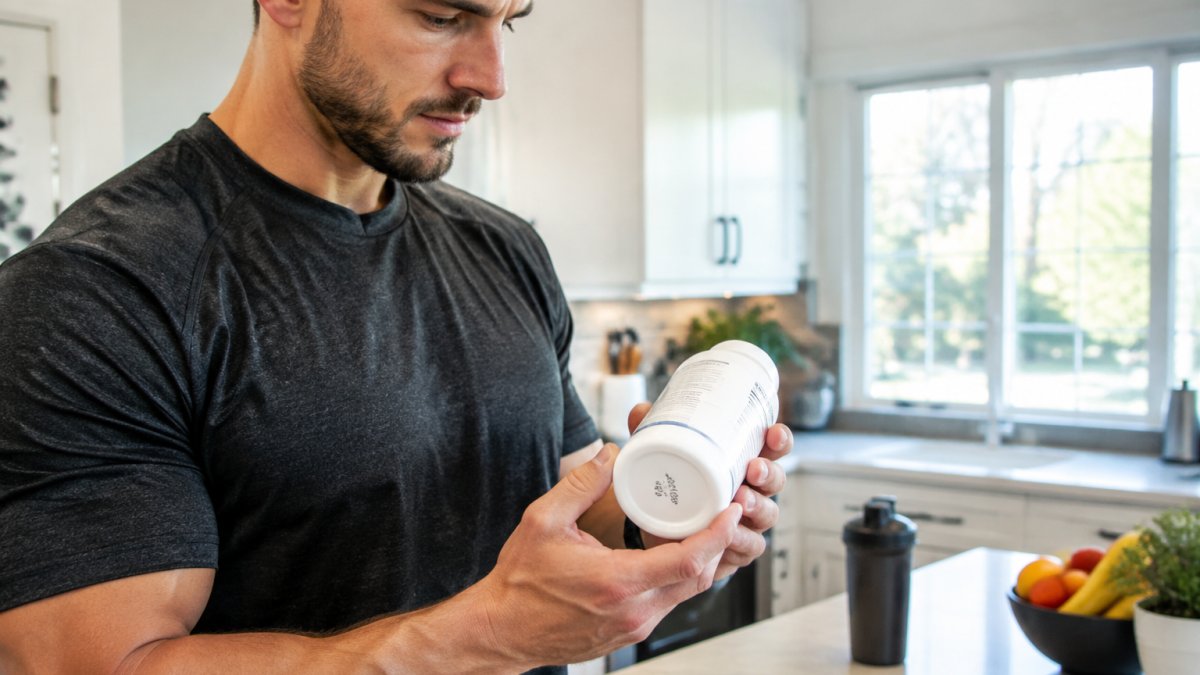
Locate the lot code on the package
Find the lot code printed on the bottle, usually near the expiration date on the bottom or side label. It's often stamped in black ink or embossed into the plastic.
Look in these spots:
- Bottom of the bottle, under the label edge
- The side panel next to the best-before date
- The seam where the label wraps around
- The inside of the box flap, if it came boxed
Write the code down exactly. One wrong digit and your lookup fails.
Match the code to the brand's test records
Take the code to the brand's own quality page or its certifier's register. Match the product name AND the lot code. Both must line up.
A common mistake is accepting a generic "all our products are tested" page. That's marketing, not proof for your bottle. You want a report tied to your specific lot.
Run a supplement batch number lookup the right way
A supplement batch number lookup works by searching the brand's quality page or a certifier's database for your exact lot code, then confirming the report matches your product. Do it in this order, every time.
- Go to the brand's official site, not a reseller page.
- Find the quality, testing, or lab-results section.
- Enter your lot code or browse by product.
- Confirm the product name and lot code match your bottle.
- Download or view the certificate of analysis.
The New Hope Network guide to finding a supplement lot's lab report makes the key point clear: match the bottle's lot code to the report for that exact lot. A report for a different lot tells you nothing about your bottle.
If the brand has no lookup tool, email customer service with your lot code and ask for the COA. A real brand sends it. A weak one stalls.
Here is the order to run every time you look up a lot code.
| Step | What to do |
|---|---|
| 1 | Go to the brand's official site, not a reseller page |
| 2 | Find the quality, testing, or lab-results section |
| 3 | Enter your lot code or browse by product |
| 4 | Confirm the product name and lot code match your bottle |
| 5 | Download or view the certificate of analysis |
What batch tested supplements actually prove
Batch tested supplements prove that a specific lot was checked for identity, potency, purity, or contaminants, and that a report exists for that lot. They do not prove the product works or that every future batch will pass.
That's the line most marketing blurs. "Batch tested" is a claim about one lot, not a guarantee for the whole brand.
Watch out: a batch number by itself isn't proof of independent testing. The records only show what the brand or lab actually tested. If the report covers potency but not banned substances, you haven't confirmed banned substances.
Want to understand what those label claims really mean before you trust them? Read our breakdown of what supplement health claims actually mean on the label.
How to check supplement authenticity beyond the label
Checking supplement authenticity goes past the batch number. You also verify the seal, the packaging quality, and where you bought it. Counterfeits can copy the label, so check the details too.
Run these checks:
- Seal: The safety seal should be intact and tight, not glued back down.
- Print quality: Fake labels look blurry, off-color, or misaligned.
- Lot code: A real code is crisp and matches the brand's format.
- Seller: Buy from authorized retailers, not random marketplace listings.
- Expiration date: It should be printed clearly and not scratched off.
Tampering shows up as loose caps, torn seals, or a label that peels too easily. If anything looks off, stop and contact the seller.
Reading the NSF and USP Verified supplements list
The NSF and USP Verified supplements list lets you confirm whether a product earned a certification mark, but it does not verify your individual batch. These programs certify products and facilities, not a single lot's lab result.
Here's how to use them:
- Go to the certifier's official product search.
- Search the brand or product name.
- Confirm the exact product appears, not just the brand.
- Check the mark on your bottle matches the listing.
A certification mark means the product met that program's standards. It's a strong signal. It's not the same as a lot-specific COA. Use both when you can.
Evaluate a certificate of analysis like a pro
A certificate of analysis is a lab document that lists what was tested on a specific lot and the results. Read it like a skeptic, not a fan.
Start with the header block. Confirm the product name matches your bottle exactly, including the flavor and size. Confirm the lot or batch code matches digit for digit.
Next, identify the lab. A real, identifiable lab has a name, an address, and usually an accreditation number you can look up. If the COA only says 'third-party lab' with no name, treat it as marketing.
Then look at the analytes and the methods. The COA should list what was tested: identity, potency, purity, contaminants, or banned substances.
Pay attention to units and detection limits.
Finally, check the pass/fail criteria. A result is only meaningful against a stated specification. If the COA says 'pass' but never shows the limit, you cannot judge whether the limit was strict or loose.
Watch out: a COA that lists every test under the sun but shows no numbers, no units, and no limits is a decoration, not a document. Do not accept it as proof.
When a batch lookup fails or the details don't match
When a batch lookup fails, don't assume the worst, but don't ignore it either. A missing or mismatched record means you cannot confirm that lot. Treat it as unverified until the brand explains it.
First, re-read the code. Lot codes are often stamped in black ink or embossed into plastic, and a single digit can be misread.
Second, confirm you are searching the right place. The brand's official site is the only source that counts. Reseller pages and marketplace listings often copy old or generic testing pages.
Third, check for duplicates. If the same lot code appears on multiple products or multiple batches, that is a recordkeeping problem. Ask the brand to clarify which product and which batch the code belongs to.
Fourth, if the product was reformulated, the old COA may not apply. Ask the brand for the COA that matches the current formula and your lot. If they cannot provide it, treat the product as unverified.
Fifth, if the bottle looks counterfeit, stop. Counterfeits copy the label but rarely copy the details. Check the seal, print quality, and seller. If anything looks off, contact the seller and the manufacturer.
Watch out: a brand that cannot or will not produce a lot-specific COA within a reasonable time is giving you an answer. Skip that product.
If you have done all of this and still cannot confirm the batch, do not use the product. The burden of proof is on the brand, not on you.
Build your supplement verification checklist today
Build your verification checklist around one rule: no match, no buy. Use this every time you shop.
- Lot code located and written down exactly
- Product name and lot code matched on the brand's page
- Certificate of analysis downloaded for your lot
- Lab name and test results reviewed, not just "pass"
- Certification mark checked against the certifier's list
- Seal, print quality, and seller checked for fakes
- Brand contacted if anything doesn't match
At Tiger Fitness, we want you to ask these questions. A brand that stands behind its testing will hand you the records without a fight. For more on ingredients and labels, dig into our supplement education library. And if you want to dial in your training and nutrition while you're at it, our free fitness tools and calculators are ready to use.
The supplement aisle rewards buyers who check. Most people never look up a lot code, which is exactly why the ones who do get burned less. We stock products from brands that back their labels with real records, and we're here to help you read them. Shop our full selection, compare labels side by side, and use our rewards program to save while you build a smarter stack. Get started with Tiger Fitness and verify every bottle before it hits your shaker.
Frequently Asked Questions
Can you look up a supplement batch number online?
Sometimes, but there is no universal public database. A batch number alone does not prove a product was independently tested. You usually need to check the brand's own quality or lab-results page, or a certifier's register like NSF or USP, for that exact product or batch. If the brand does not publish lot-level results, ask their customer service for the certificate of analysis for your specific batch number before you buy again.
Does a batch number prove that a supplement was third-party tested?
No. A batch number is a recordkeeping tool that lets a manufacturer trace a product through production. It only proves third-party testing if you can match that exact batch code to a test report from an independent lab or a certification program. Always ask for the certificate of analysis tied to your lot number.
How can athletes check whether a supplement is certified for sport?
Start with the certification mark on the label, then confirm the product on the certifier's own list. NSF Certified for Sport and USP Verified both publish searchable product lists. Match the exact product name and batch number to the listing. If the product is not on the list, treat it as uncertified. For batch tested supplements, ask the brand for the independent lab report for your lot before you take it during a tested season.
What should you do if a supplement batch number cannot be verified?
Stop and ask questions. Contact the brand and request the certificate of analysis for that exact batch number. If they cannot or will not provide it, do not use the product. Check the packaging for tampering, mismatched lot codes, or spelling errors that suggest a counterfeit. A brand that cannot produce lot-level test results is a brand you should not trust with your training or your health.

Leave a comment